

Upper Mustang Tiji Festival: Dates, History, and Travel Guide

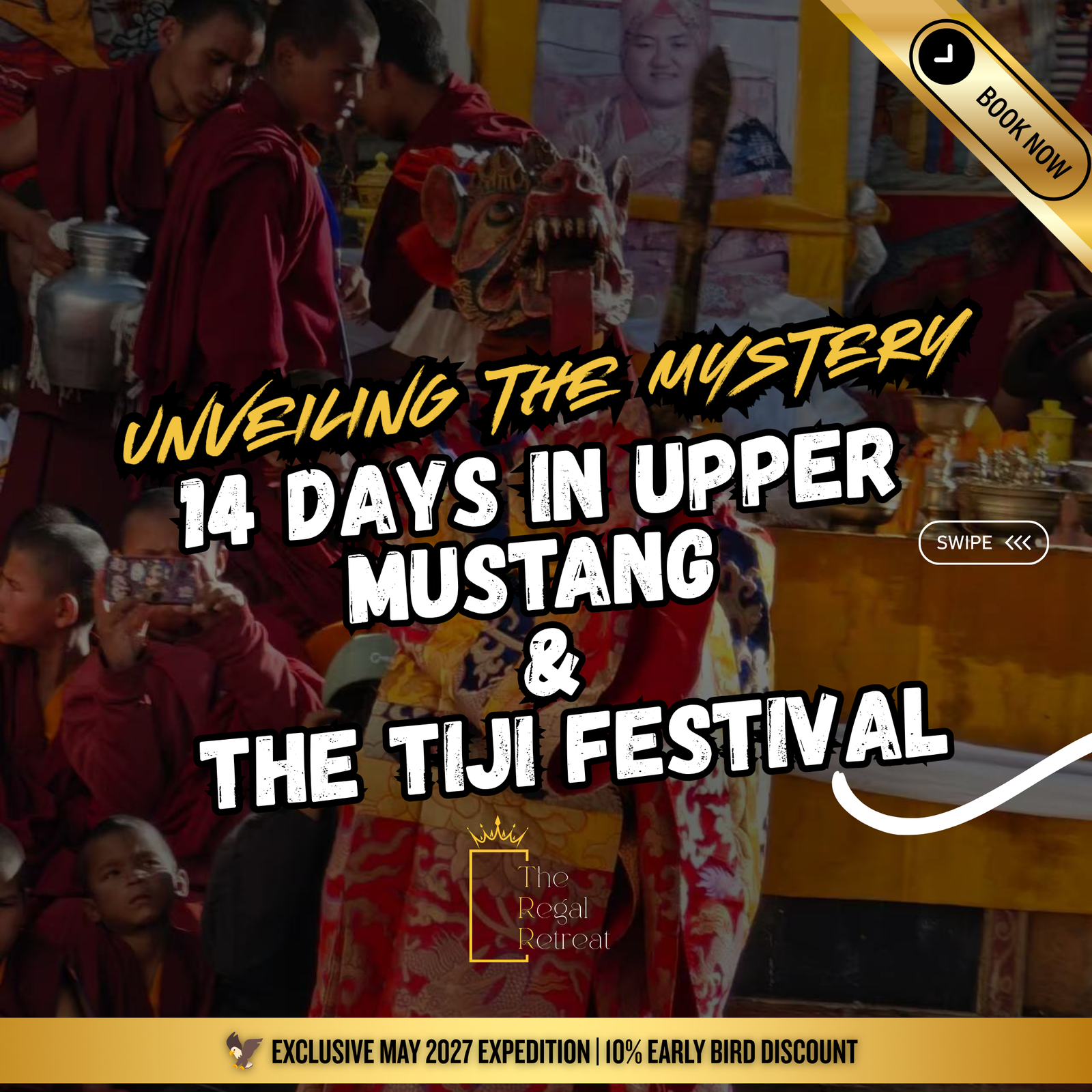
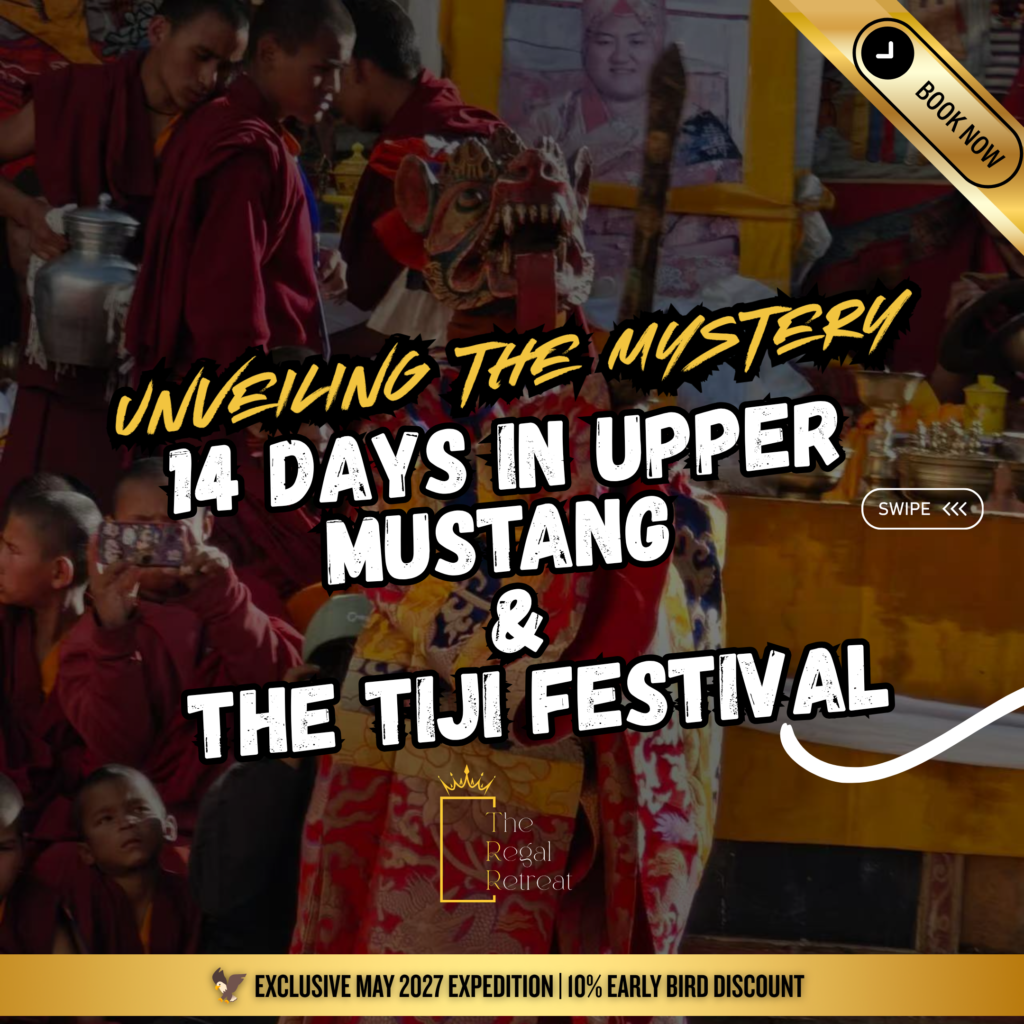
Every spring, the walled capital of Lo Manthang hosts the Tiji Festival, the most important religious event in Upper Mustang. Short for Tempa Chirim (“Prayer for World Peace”), this three-day ritual belongs to the Sakya lineage of Tibetan Buddhism. Organized by the monks of Choedhe Monastery, the festival combines sacred masked dances, centuries-old Buddhist liturgy, and living Himalayan traditions in one of Nepal’s most remote desert regions.
What is the Tiji Festival?
The Tiji Festival is an annual ritual reenactment of the myth of Dorje Jono (Vajrakila), a protector deity who battles and defeats the demon Ma Tam Ru Ta. According to Mustang folklore, the demon unleashed severe storms, droughts, and disease across the ancient Kingdom of Lo to destroy local livelihoods.
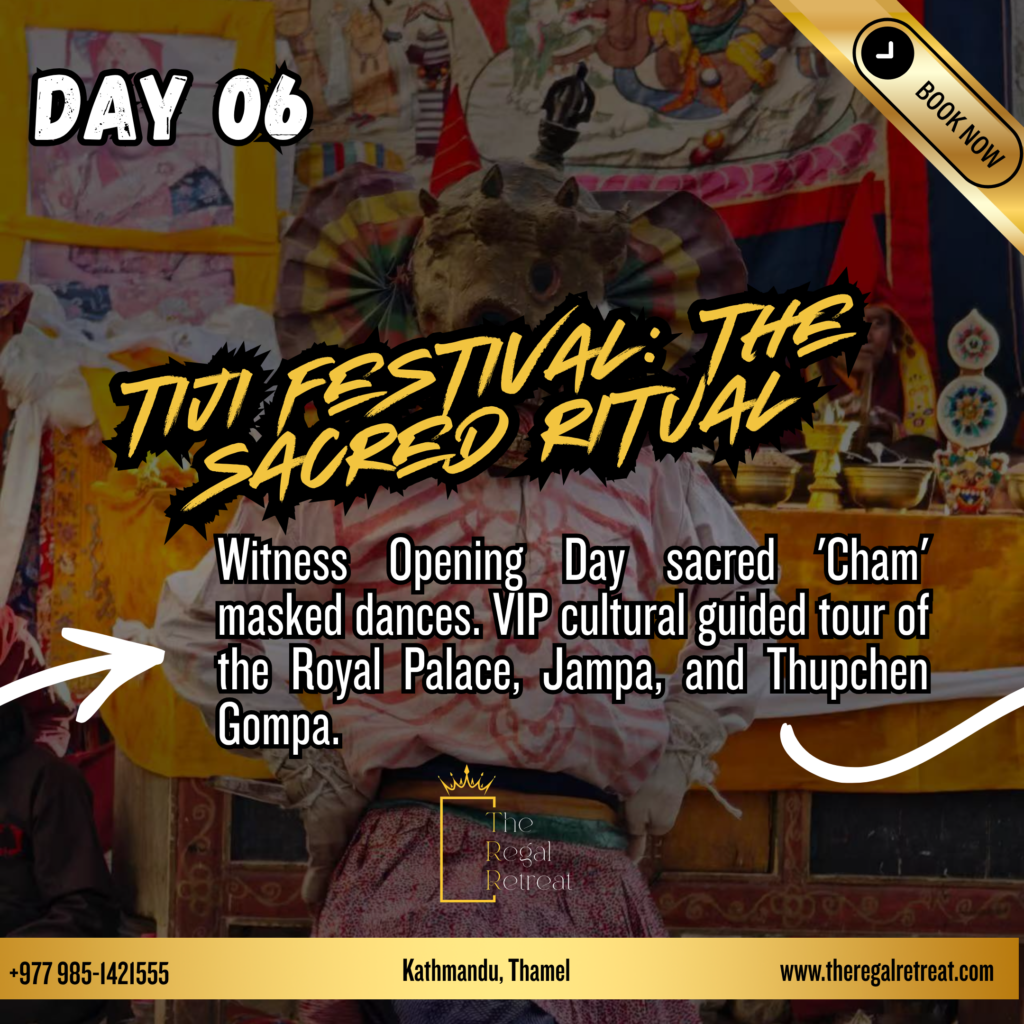
Through the sacred Cham (masked dances), monks perform rituals to dispel demonic forces, cleanse the community of accumulated bad karma, and ensure adequate rainfall and fertile harvests for the coming year.
The Three-Day Celebration in Lo Manthang
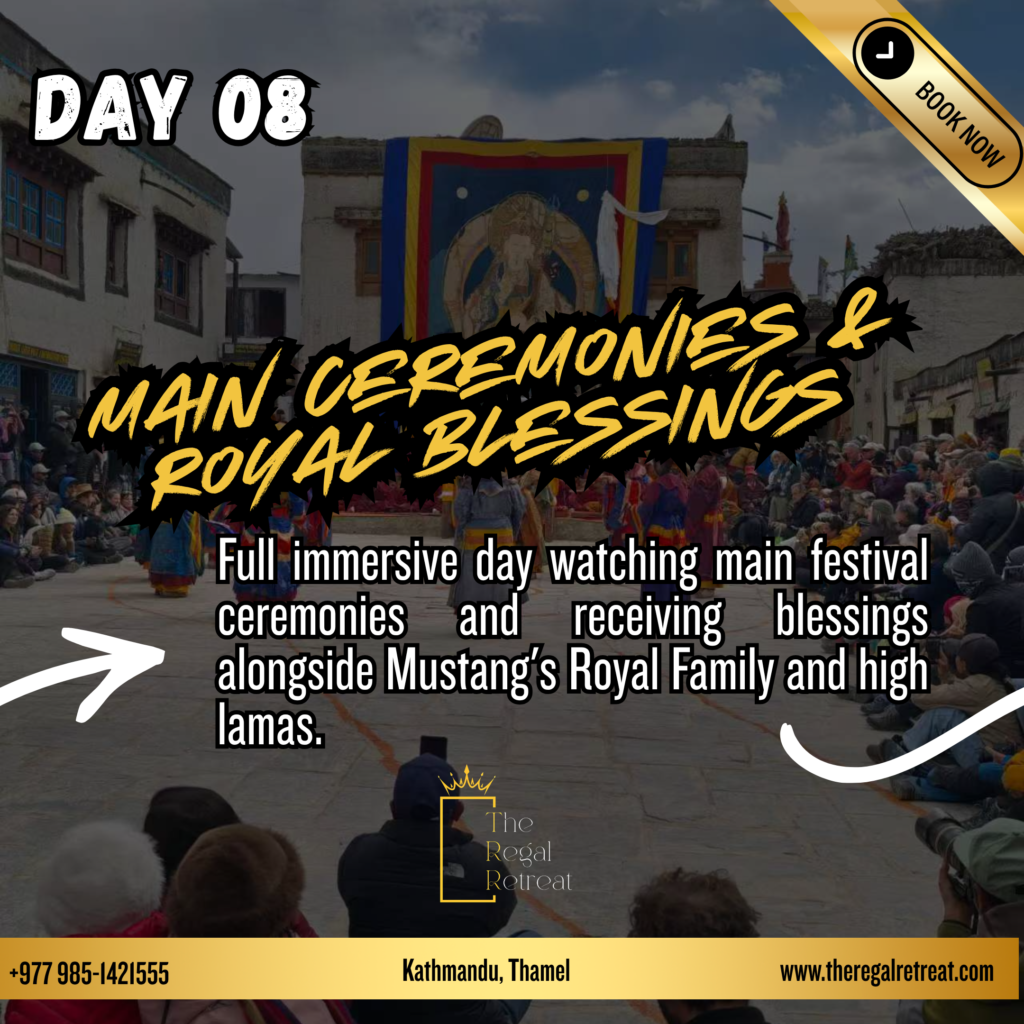
The festival unfolds in the open square directly in front of the historic Royal Palace in Lo Manthang. A massive, antique thangka portraying Guru Padmasambhava drops down the palace wall, creating the focal backdrop for all ceremonies.
Day 1: Tsa Chham (Invocation and Cleansing)
The morning opens with monastic chants and horn prayers inside Choedhe Monastery before the ceremony shifts outdoors. The lead dancer, known as the Tsowo, leads a slow, methodical dance sequence called Tsa Chham. These movements establish a protective mandala on the courtyard ground and summon the guardian deities to witness the rites.
Day 2: Nga Chham (Transformation and Battle)
On the second day, the tempo increases significantly. Monks return in elaborate, hand-carved masks representing wrathful deities, animal figures, and celestial defenders. Through the Nga Chham dance, performers enact Dorje Jono’s battle against destructive energies, turning negative forces into protective dharma.
Day 3: Rha Chham (Banishment and Triumph)
The final day features the Rha Chham ceremony. Monks present a red dough effigy (torma) representing the demon Ma Tam Ru Ta. The Tsowo strikes the effigy with a ceremonial three-sided dagger (phurba) before it is carried outside the city walls. In a final burst of music, prayers, and ceremonial musket fire, the remains are cast onto the barren ground, signifying the total expulsion of evil from the kingdom.
Tiji Festival Dates
Tiji follows the Tibetan lunar calendar and takes place during the 27th to 29th days of the third lunar month.
| Year | Gregorian Dates | Location |
| 2026 | May 14 – May 16, 2026 | Lo Manthang, Upper Mustang |
| 2027 | June 1 – June 3, 2027 | Lo Manthang, Upper Mustang |
| 2028 | May 20 – May 22, 2028 (Tentative) | Lo Manthang, Upper Mustang |
Essential Travel Logistics and Permits
Upper Mustang sits behind the Annapurna and Dhaulagiri ranges, bordering the Tibetan plateau. Because it remains a regulated cultural zone, strict travel policies apply.
- Restricted Area Permit (RAP): Foreign travelers must pay 500 USD per person for the first 10 days in the restricted zone north of Kagbeni. Each additional day costs 50 USD.
- ACAP Permit: An Annapurna Conservation Area Project permit is also mandatory (approx. 3,000 NPR).
- Group and Guide Regulations: Individual or solo travel is strictly barred. You must book through a government-registered Nepali agency and travel in a group of at least two foreign nationals accompanied by a licensed guide.
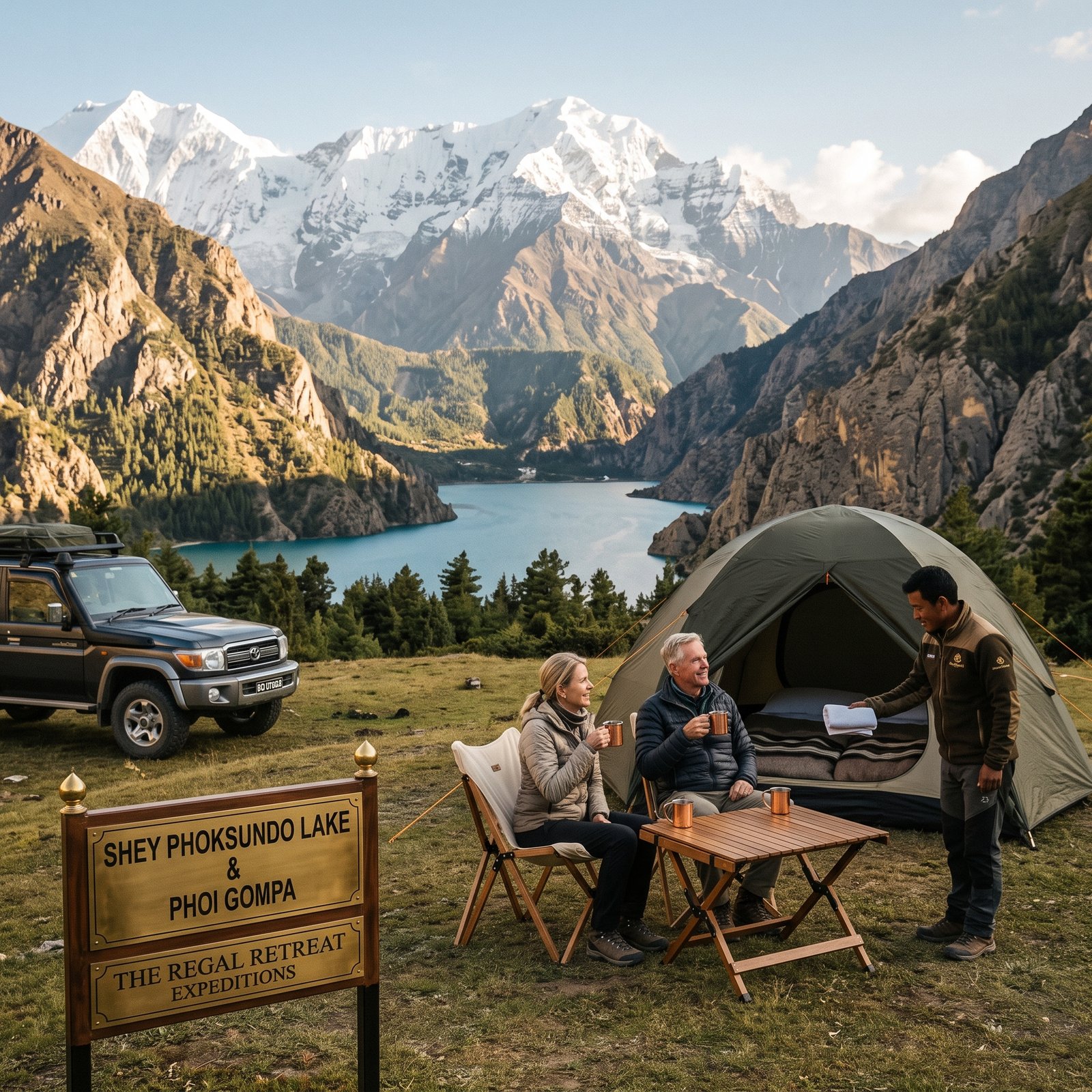
- Best Mode of Travel: While traditional trekking along the Kali Gandaki is possible, modern 4WD overland tours provide a comfortable alternative over high mountain passes (such as Syangboche and Taklam La), reducing physical strain at high elevations (3,840 m in Lo Manthang).
Recommended 14-Day Route Overview
- Kathmandu: Arrival, paperwork verification, and valley heritage walk.
- Pokhara: Scenic domestic flight or drive; overnight by Phewa Lake.
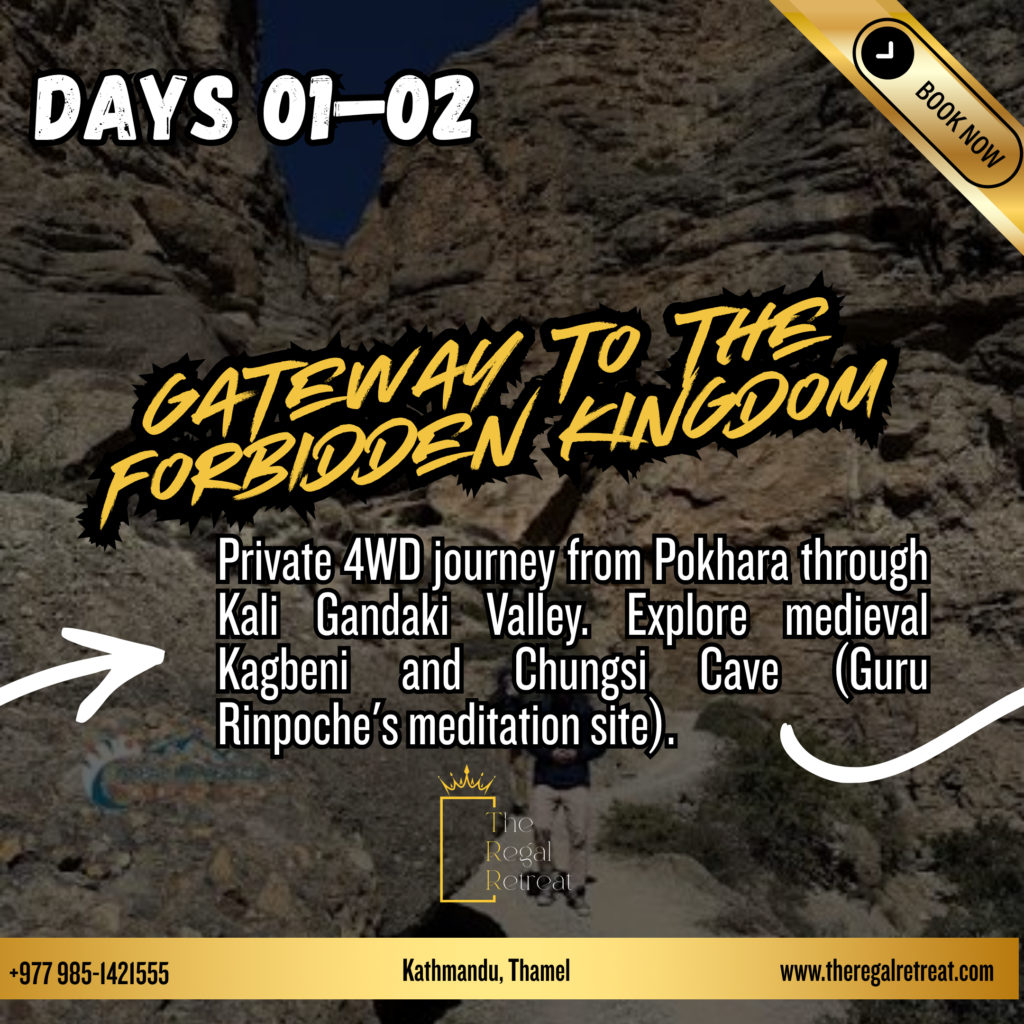
- Jomsom to Chele (3,050 m): Flight to Jomsom; private 4WD drive via Kagbeni into the restricted corridor.
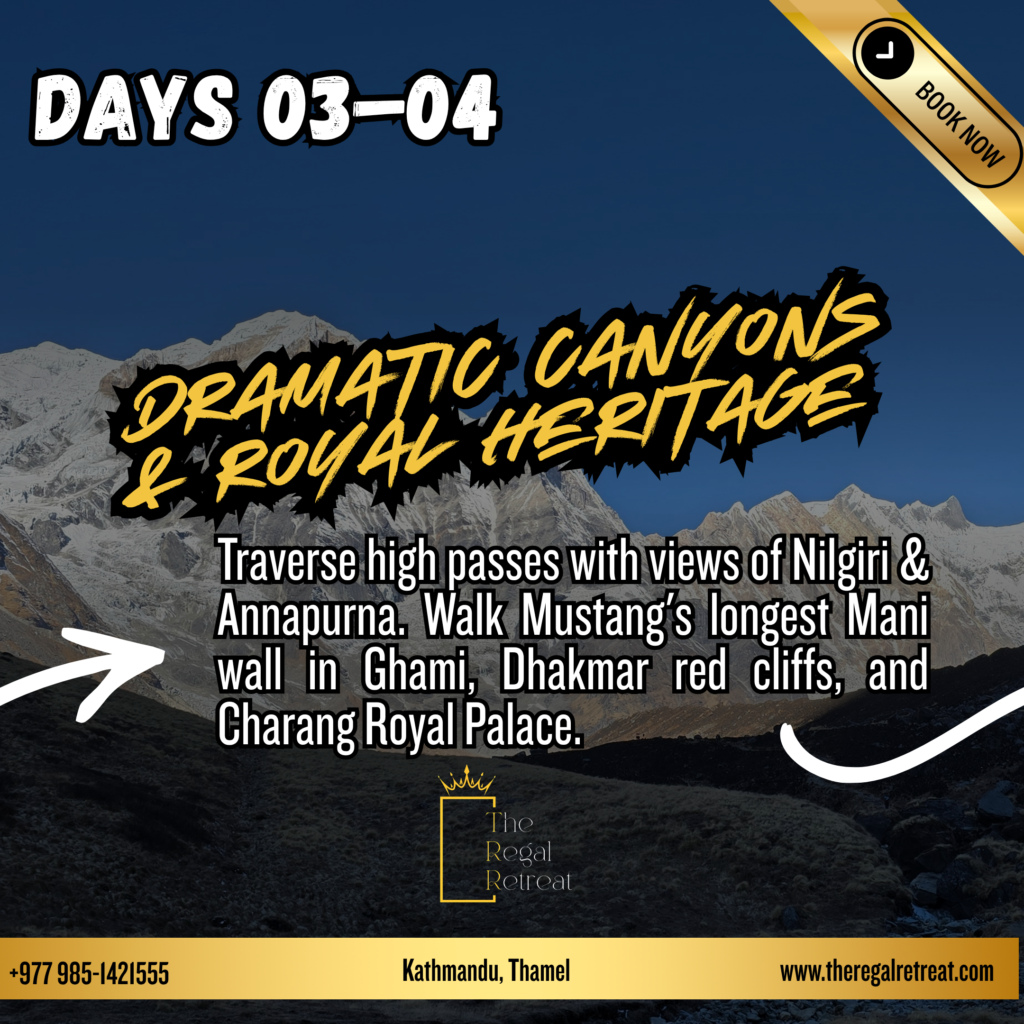
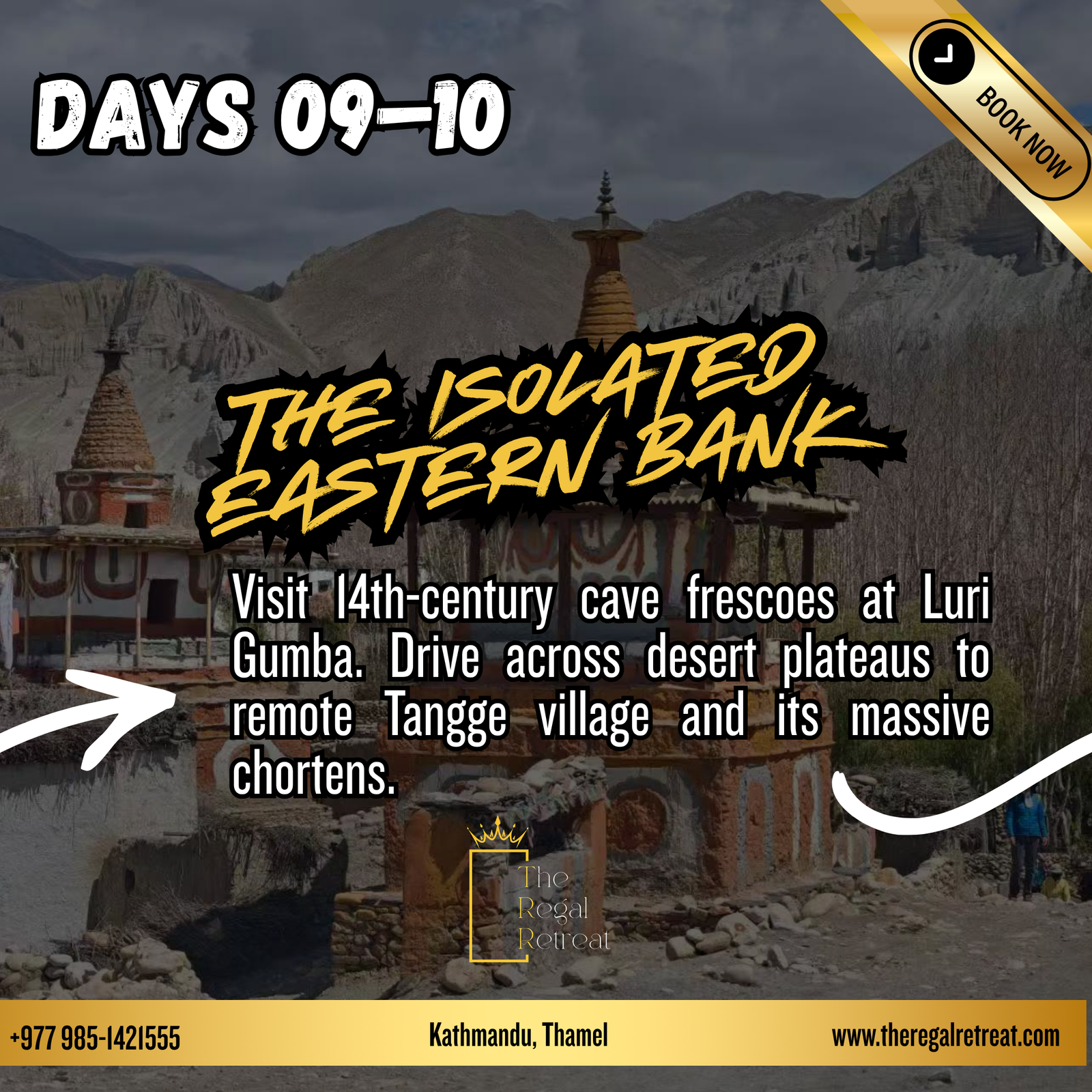
- Chele to Charang (3,630 m): Overland drive past Ghami, ancient red cliff walls, and long mani stone corridors.
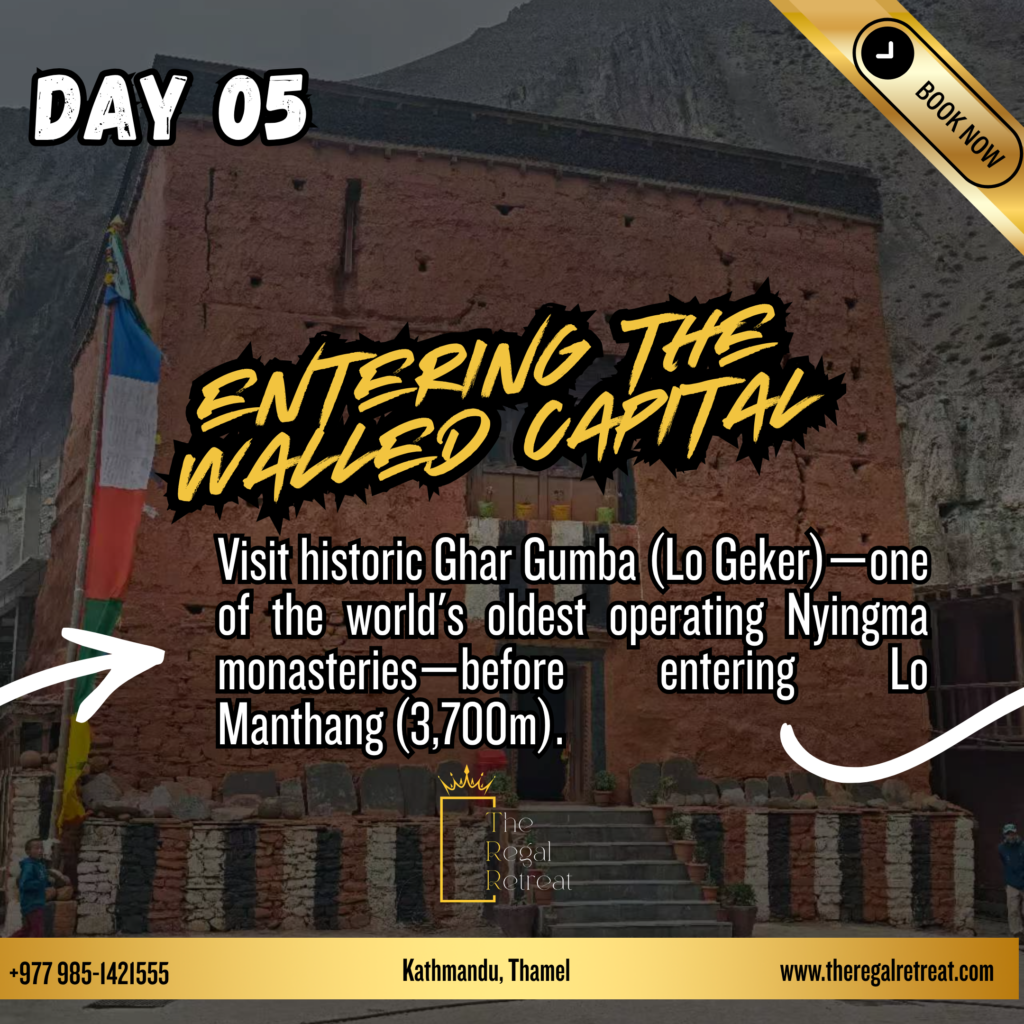
- Charang to Lo Manthang (3,840 m): Arrival at the walled city; explore Jampa and Thubchen monasteries.
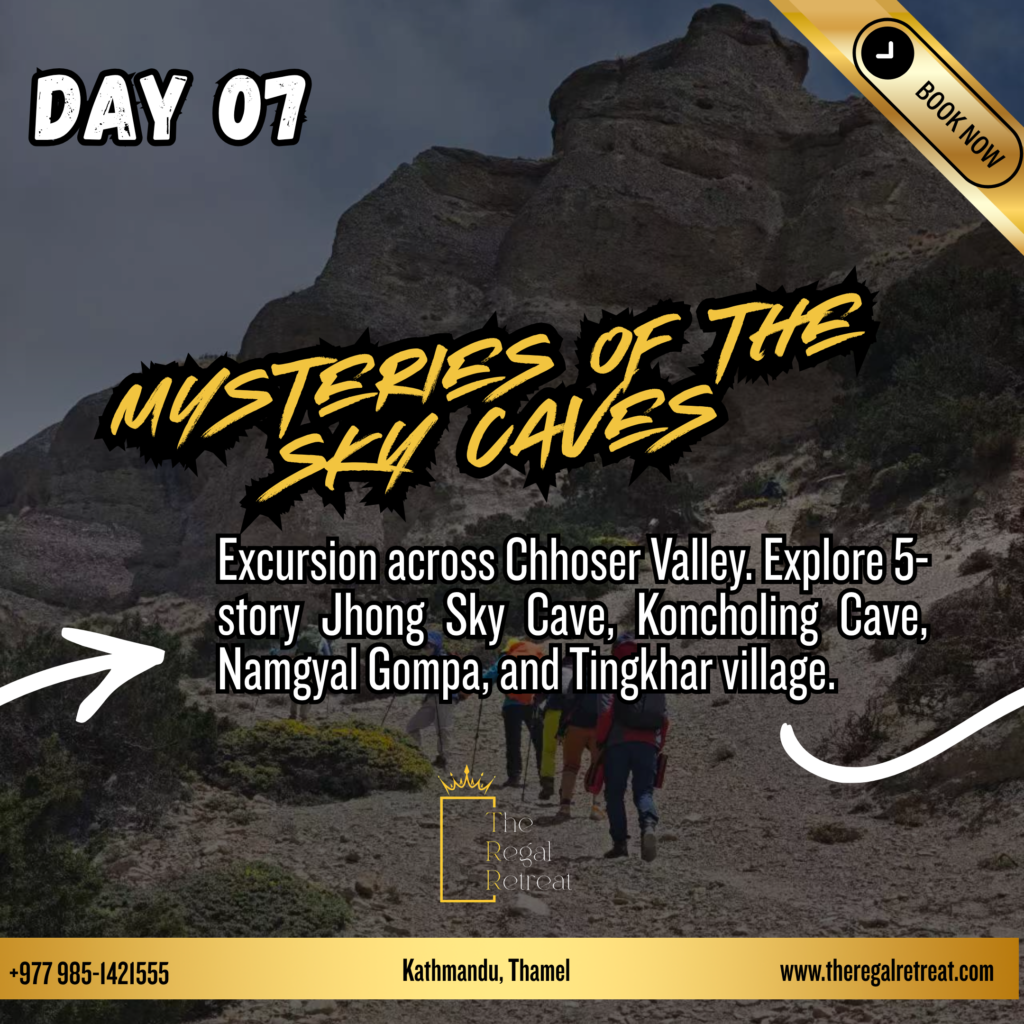
- Lo Manthang (Days 1–3 of Tiji): Attend the three-day festival in the palace courtyard; afternoon excursion to the Chhoser Sky Caves.
- Lo Manthang to Jomsom: Return overland drive south via Muktinath.
- Jomsom – Pokhara – Kathmandu: Return domestic flights and international departure.